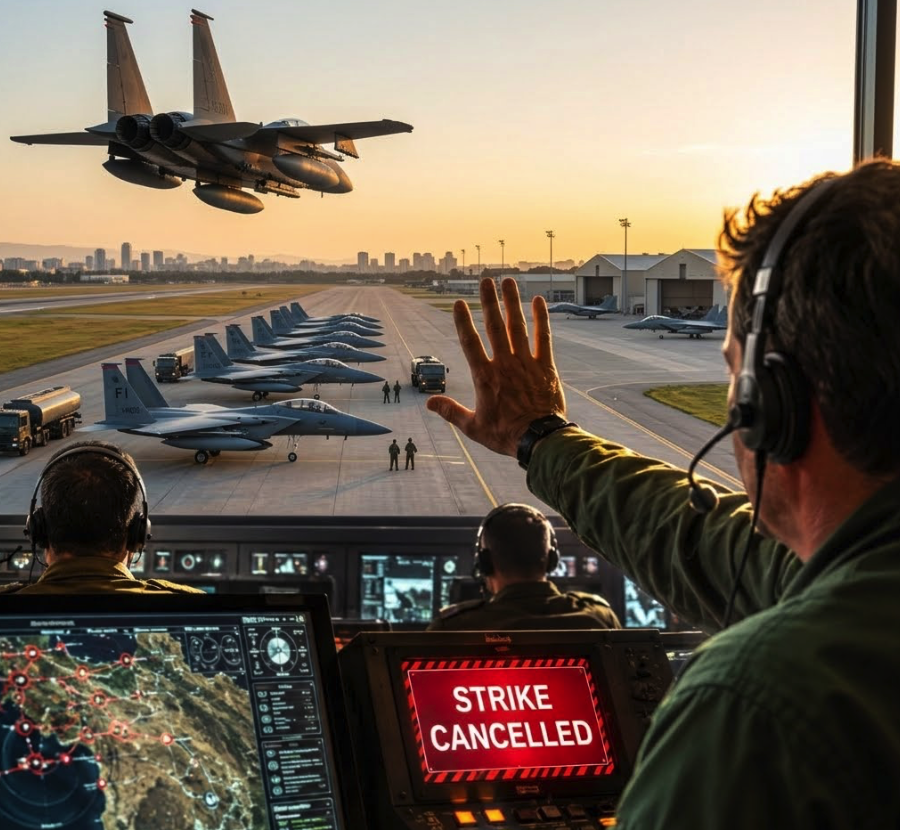
We were just minutes away from all-out war in the Middle East, and most people that are living in the western world have no idea what just happened. After hitting Iran with two waves of strikes, Israeli Prime Minister Benjamin Netanyahu had ordered an absolutely massive third wave, but he called it off after a last minute phone call with President Trump. If that massive third wave of strikes had gone ahead, the Iranians would have definitely responded in a major way, and we would be talking about “all-out war in the Middle East” right now.
Let me briefly review how we got to this point.
Hezbollah has been firing hundreds and hundreds of rockets into Israel, and so on Sunday the Israelis conducted airstrikes in southern Beirut.
The Iranians had warned in advance that if the IDF bombed southern Beirut they would respond by firing missiles into northern Israel, and that is precisely what happened…
Iran began its retaliatory strikes against Israel around 10 p.m. Sunday, with the first wave of missiles targeting the Ramat David Air Base in northern Israel. The base was called the “source” of aggression against southern Lebanon and Beirut’s southern suburbs, Iran’s semiofficial Tasnim news agency reported.
“Since last night, they fired close to 30 ballistic missiles at Israel,” an Israeli military official said Monday, speaking on the condition of anonymity to discuss sensitive security operations. “At the same time, the Houthis also added two more; one fell on the way to Israel.”
Once the first Iranian missiles were on their way to Israel, it was inevitable that the Israelis would strike back.
The first two waves of strikes primarily focused on Iranian air defense systems…
Israel responded with two waves of strikes on Iran, targeting military and energy infrastructure.
Overnight, dozens of Israeli Air Force fighter jets struck nine Iranian air defense systems in western and central Iran. The IDF later published footage showing a strike on one of the systems, which the military said was armed with anti-aircraft missiles.
“The destruction of the systems further expands the Israeli Air Force’s aerial superiority in the skies over Iran, with the goal of continuing to remove threats to the citizens of the State of Israel,” the military said.
In addition, Iran’s most important petrochemical complex was also hit…
The Israeli military confirmed it attacked Iran’s sprawling Mahshahr petrochemical complex on Monday, marking its first strike on the critical asset since the April 7 ceasefire agreement.
The Bandar Imam Petrochemical Complex, as it is formally known, is widely seen as one of the crown jewels of Iran’s energy sector. Tucked near the southern city of Mahshahr and Bandar Imam Khomeini – a vital industrial port on the Persian Gulf – the sprawling complex consists of more than 50 separate petrochemical plants producing roughly 72 million tons of products annually, according to Iran’s oil ministry.
Subsequently, a third round of airstrikes was ordered, and that one was supposed to be much larger than the previous two waves.
But after a last minute phone call from Trump, Netanyahu called it off at the last minute “with fighter jets on the runway”…
Prime Minister Benjamin Netanyahu reportedly called off a major strike on Iran with fighter jets on the runway, after US President Donald Trump instructed him on Monday not to escalate Israel’s fight with the Islamic Republic.
Apparently Trump understood the need for Israel to retaliate, but he was also concerned that a “massive” third wave of strikes could seriously harm peace negotiations with Iran…
A call between the two men on Monday afternoon, according to Channel 12, marked a turning point: Around 4:30 p.m., the network reported, Netanyahu approved a major operation against Iran to take place later in the day. A New York Times reporter also described the planned attack as “massive.”
But shortly afterward, Trump called him and instructed him to halt any further attacks so Washington could pursue a deal to end the war. Netanyahu agreed, calling off the operation while aircraft were prepared for takeoff, leading to “considerable confusion” within the military high command, Channel 12 reported.
One conversation dramatically altered the course of global events.
The Israelis were ready to bring the hammer down, but Netanyahu relented after Trump threatened that Israel “would be left alone” if the third wave of strikes proceeded…
But in the early morning hours, when Washington realized Israel was also preparing a much more significant response in Iran, the picture changed. According to the sources, Trump understood that Israel might use the Iranian fire and the developments in Lebanon to expand the campaign and hit strategic targets in Iran. A source familiar with the details said the White House feared Netanyahu was, in effect, trying to torpedo the possibility of reaching an agreement with Iran by creating a new security reality.
At that point, Trump called Netanyahu. According to the sources, the conversation was very firm. The U.S. president made clear to the prime minister that if Israel launched a broad strike in Iran, it would be left alone. Netanyahu argued that Israel had to respond after the Iranian fire, and that failing to respond would harm deterrence. Trump understood Israel’s need to respond, but demanded that the response be limited and measured, not one that would open a new campaign against Tehran.
Israel had already prepared plans for a much broader strike than the one carried out. According to Israeli sources, dozens of fighter jets were supposed to take part in an attack on a series of targets across Iran. But after the call with Trump, Netanyahu informed the defense establishment that the plans had to be stopped. The IDF canceled strikes planned for later in the day and overnight, and in practice the round with Iran was halted long before Israel had exhausted it.
Trump is so desperate to reach a deal with Iran.
But he doesn’t understand that the Iranians will never give him what he wants.
The only way that there will even be a temporary ceasefire extension is if Trump basically surrenders and gives the Iranians what they are demanding.
At the moment, there is a very uneasy calm in the Middle East because both Israel and Iran have pledged to halt their attacks for now…
After trading volleys of long-range missile strikes that defied calls for restraint from President Donald Trump and threatened to tip the region back into all-out war, Israel and Iran signaled Monday that the attacks had concluded for now.
The escalatory spiral that started over the weekend and stretched into Monday began after Israel carried out an airstrike Sunday in southern Beirut, a stronghold of the Iran-backed militant group Hezbollah.
“Currently, the fire on this front is contained, because after the terror regime in Tehran took a blow, it ceased attacking us,” Israeli Prime Minister Benjamin Netanyahu said Monday in a video address.
Needless to say, this state of affairs won’t last long.
Hezbollah will continue sending rockets and drones into northern Israel, and the Israelis are threatening to strike southern Beirut again if that doesn’t stop…
Israel will strike Hezbollah in Beirut in retaliation for any further cross-border attacks by the Iranian-backed Lebanese faction, Israel’s defense minister says in a statement, rejecting a threat by Tehran to resume missile salvos in solidarity with Lebanon.
“Any Iranian attempt to link Lebanon to Iran in attacking Israel will be met with a forcible response, as happened yesterday,” Defense Minister Israel Katz says, referring to an air strike in the Lebanese capital which prompted Iranian missile fire against Israeli targets. If Hezbollah attacks Israel’s northern communities “it will lead to an attack on the Dahieh,” he says, referring to a Beirut suburb where support for Hezbollah is strong.
Once the IDF hits southern Beirut again, the Iranians will almost certainly fire more ballistic missiles at northern Israel.
And Netanyahu is promising that there will be no holding back if that occurs…
In his Monday announcement halting strikes on Iran, Netanyahu warned Tehran that his country would “respond forcefully” if attacked again.
Iran issued similar threats. “In the event of continued aggression and mischief, including in southern Lebanon, much more severe and devastating actions than before will be forthcoming,” Iran’s armed forces headquarters said, according to the semiofficial Fars News Agency.
The Trump administration may be tired of fighting, but Hezbollah, Iran and Israel are not.
And once someone decides to break out an unconventional weapon, any hope for a negotiated solution will be completely gone.
All-out war has been averted for the moment, but this is just a temporary reprieve.
At this stage everyone should be able to see where all of this is eventually heading, and it won’t be pretty.
Michael’s new book entitled “10 Prophetic Events That Are Coming Next” is available in paperback and for the Kindle on Amazon.com, and you can subscribe to his Substack newsletter at michaeltsnyder.substack.com.

About the Author: Michael Snyder’s new book entitled “10 Prophetic Events That Are Coming Next” is available in paperback and for the Kindle on Amazon.com. He has also written nine other books that are available on Amazon.com including “Chaos”, “End Times”, “7 Year Apocalypse”, “Lost Prophecies Of The Future Of America”, “The Beginning Of The End”, and “Living A Life That Really Matters”. When you purchase any of Michael’s books you help to support the work that he is doing. You can also get his articles by email as soon as he publishes them by subscribing to his Substack newsletter. Michael has published thousands of articles on The Economic Collapse Blog, End Of The American Dream and The Most Important News, and he always freely and happily allows others to republish those articles on their own websites. These are such troubled times, and people need hope. John 3:16 tells us about the hope that God has given us through Jesus Christ: “For God so loved the world, that he gave his only begotten Son, that whosoever believeth in him should not perish, but have everlasting life.” If you have not already done so, we strongly urge you to invite Jesus Christ to be your Lord and Savior today.